

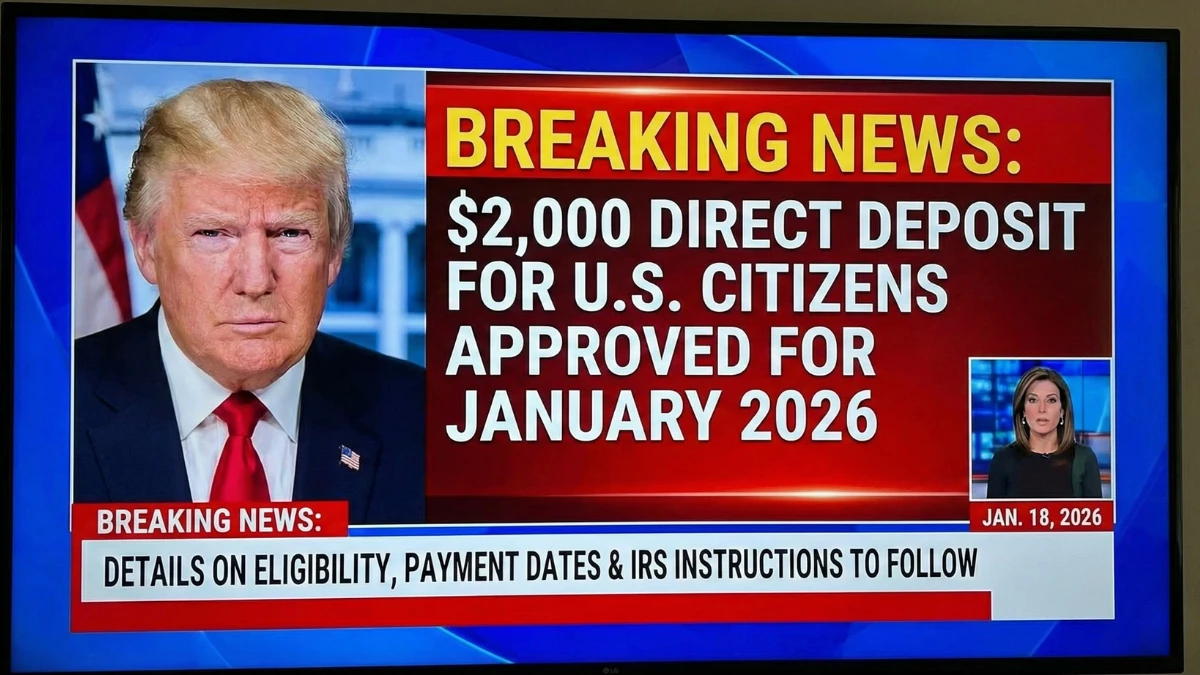
$2,000 Direct Deposit January 2026 : As January 2026 begins, many Americans are watching their bank accounts closely after hearing reports of a $2,000 direct deposit. With post-holiday bills, rent, and rising living costs, any extra money can feel like a lifeline. But is this a brand-new stimulus payment from the government, or something else entirely?
Here’s a clear, honest breakdown of the $2,000 direct deposit in January 2026, explained simply so you know exactly what to expect.
Is There a New $2,000 Stimulus Payment in January 2026?

No. There is newly approved nationwide $2,000 stimulus check for everyone in January 2026. The IRS and federal government have announced universal relief payments like those issued during the pandemic years.
That said, many people are still receiving deposits around $2,000 or more. These payments are real, but they come from existing programs such as tax refunds, refundable credits, or federal benefits. The confusion comes from the timing and the amount, from new legislation.
Why Are People Seeing $2,000 Deposits This Month?
January is one of the busiest months for federal payments. Several legitimate deposits often arrive close together, making the total look like a special one-time payment.
Common reasons include:
- Early IRS tax refunds for the 2025 tax year
- Refundable credits like the Earned Income Tax Credit
- Child Tax Credit refunds for eligible families
- Monthly Social Security, SSI, or SSDI benefits
- IRS corrections or delayed payments from earlier returns

When these payments hit bank accounts, many assume it’s a new $2,000 program, when it’s actually money they were already owed.
Who May Receive Around $2,000 in January 2026?
Eligibility depends on the source of the payment, not citizenship alone.
Early Tax Filers
Taxpayers who file their 2025 returns early and overpaid taxes may receive refunds in January. Refund amounts often exceed $2,000 due to credits and withholding.
Earned Income Tax Credit (EITC) Recipients

Low- and moderate-income workers who qualify for the EITC may see larger refunds, frequently crossing the $2,000 mark.
Child Tax Credit (CTC) Beneficiaries
Families with eligible children may receive higher refunds because parts of the CTC are refundable.
Social Security, SSI, and SSDI Recipients
Monthly benefit payments continue in January. While not stimulus payments, some beneficiaries receive close to $2,000 depending on their benefit level.
IRS Adjustments or Back Payments
If the IRS fixes an error or releases delayed credits, a one-time deposit may be issued.
Payment Dates to Know in January 2026
There is no single payment date for a $2,000 deposit. Timing depends on the payment type.
- Early January: SSI and some federal benefits (adjusted for holidays)
- Mid-January: IRS begins accepting and processing tax returns
- Mid to late January: First wave of direct deposit tax refunds
- Up to 21 days: Typical IRS refund processing window
Direct deposit is always the fastest way to receive funds.
IRS Tips to Avoid Delays and Scams
To ensure smooth payments and avoid misinformation, follow these steps:
- File your tax return early and accurately
- Choose direct deposit instead of a paper check
- Double-check bank account and routing numbers
- Track refunds using official IRS tools only
The IRS will never contact you by text, email, or social media asking for personal or banking details.
FAQs About the $2,000 Direct Deposit
Is the $2,000 payment automatic for everyone?
No. Payments depend on eligibility for refunds, credits, or benefits.
Do I need to apply for this deposit?
No application is required beyond filing your tax return or qualifying for benefits.
Can Social Security recipients get this payment?
They may receive regular benefits, but there is no extra $2,000 stimulus for all recipients.
Will there be another stimulus check later in 2026?
As of now, no new stimulus payments have been approved.
How can I check where my payment came from?
Review your IRS account transcript or benefit payment statement.
Final Thoughts
The $2,000 direct deposit in January 2026 is not a new government giveaway, but it is real money for millions of Americans. Whether it comes as a tax refund, refundable credit, or federal benefit, it reflects support already built into the system.
By filing early, choosing direct deposit, and relying on official IRS guidance, you can avoid confusion and scams while starting 2026 with greater financial clarity and confidence.