

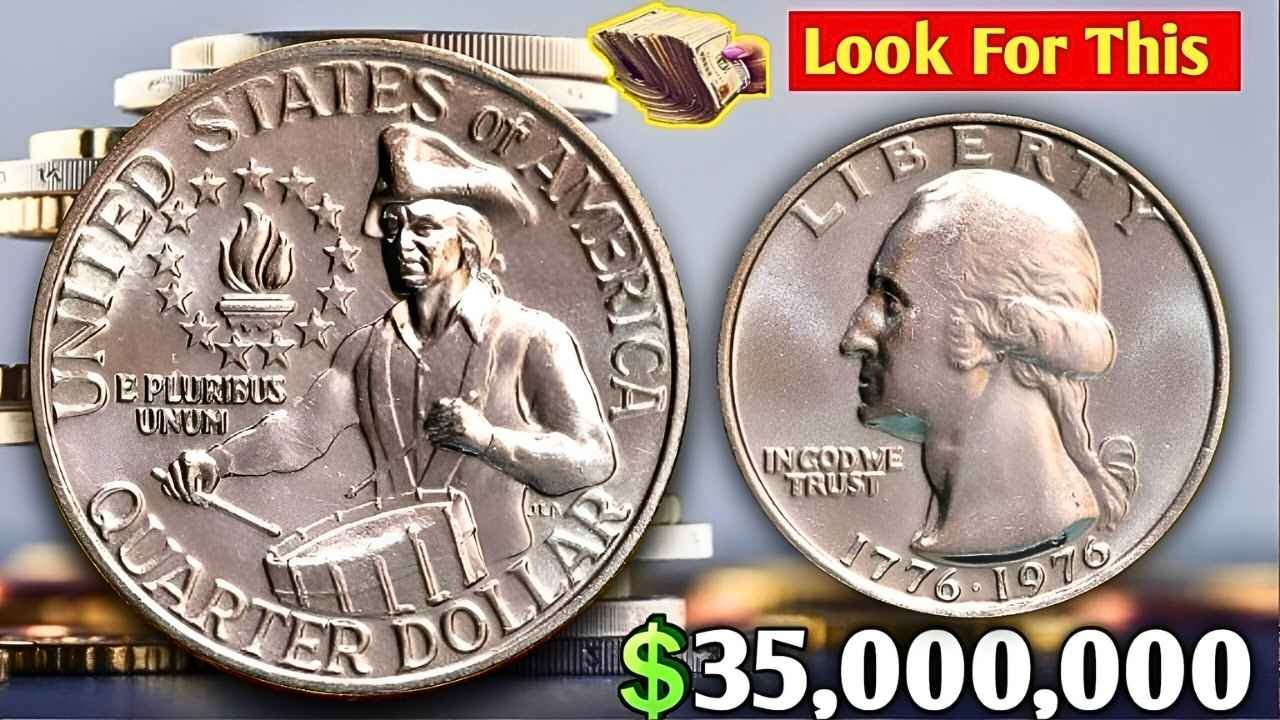
1976 Bicentennial Quarter Worth $7 Million : The idea that a simple quarter could be worth millions sounds unbelievable, yet few coins spark as much curiosity as the 1976 Bicentennial Quarter. Created to celebrate America’s 200th anniversary, this coin is familiar to millions of people. Most examples are only worth face value, but a very small number of rare varieties and error coins have achieved legendary status. Some have sold for extraordinary prices, fueling stories of Bicentennial Quarters valued in the millions.
For collectors and everyday coin hunters alike, knowing how to identify these rare varieties can mean the difference between spare change and a life-changing discovery.
What Makes the 1976 Bicentennial Quarter Special
A Historic Design with Lasting Appeal
The Bicentennial Quarter was issued with a dual date, 1776–1976, to mark 200 years of American independence. Instead of the traditional eagle, the reverse features a colonial drummer designed by Jack L. Ahr. George Washington’s portrait remained on the obverse, giving the coin a blend of tradition and celebration.
Millions were minted for circulation, along with special collector versions. This combination of high production and unique design is why the coin is still widely found today.
Why Some Bicentennial Quarters Are Extremely Valuable
Rarity, Errors, and Condition Matter
While most Bicentennial Quarters are common, a small percentage stand out due to one or more of the following factors:
- Limited collector-only production
- Unusual minting errors
- Precious metal composition
- Exceptional mint state condition
The highest values are typically achieved by coins that combine rarity with top-tier professional grading and clear documentation.
The Rare Varieties to Look For
Silver-Clad Proof Bicentennial Quarter
Some Bicentennial Quarters were struck in a 40 percent silver composition and sold directly to collectors. These silver-clad proof coins have a distinct finish and higher intrinsic value than standard copper-nickel quarters. When preserved in flawless condition, they command strong premiums.
Double Die Obverse Errors
Double die obverse coins show noticeable doubling on elements like the date, lettering, or Washington’s profile. These errors occur during die creation and are among the most sought-after mistakes in U.S. coinage. Clear, dramatic doubling significantly increases value.
Off-Center Strike Errors
An off-center strike happens when the coin planchet is misaligned during striking. The more dramatic the shift, while still showing the date, the more desirable the coin becomes. Bicentennial Quarters with strong off-center strikes are rare and visually striking.
High-Grade Mint State Coins
Even without errors, Bicentennial Quarters in exceptionally high mint state condition are scarce. Most entered circulation and show wear. Coins graded at the highest levels by professional services can be worth far more than typical examples.
Key Bicentennial Quarter Varieties and Value Ranges
| Variety Type | Key Identifying Feature | Approximate Value Range |
|---|---|---|
| Silver-Clad Proof | 40% silver, mirror-like finish | $10 to $5,000+ |
| Double Die Obverse | Visible doubling on date or letters | $1,000 to $100,000+ |
| Off-Center Strike | Design shifted off-center | $500 to $50,000+ |
| High-Grade Mint State | Exceptional luster and sharp detail | $300 to $20,000+ |
| Legendary Rarities | Unique errors with provenance | Up to millions |
Values depend heavily on condition, rarity, and professional grading.
How to Identify a Rare Bicentennial Quarter
Simple Steps for Collectors
Start by examining the coin carefully under good lighting and magnification.
Focus on:
- The finish and weight, which can hint at silver composition
- Doubling on the date or lettering
- Alignment of the design for off-center strikes
- Overall condition, including scratches, wear, and luster
Mint marks can help narrow down origin, but condition and errors matter more for value.
Why Professional Grading Is Critical
Coins rumored to be worth thousands or millions must be authenticated and graded. Professional grading services evaluate strike quality, surface preservation, and originality. A certified grade adds trust, protects against counterfeits, and often multiplies a coin’s market value.
For potentially rare Bicentennial Quarters, professional grading is not optional—it is essential.
Tips for Collectors Searching for Valuable Quarters
- Never clean a coin, as this can destroy value
- Handle coins by the edges only
- Store coins in protective holders
- Research recent auction results for realistic pricing
- Buy and sell through reputable dealers
Patience and education are the most valuable tools in coin collecting.
FAQs About the 1976 Bicentennial Quarter
Are all Bicentennial Quarters worth money?
No. Most are worth face value unless they have silver content, errors, or high-grade condition.
How do I know if my quarter is silver?
Silver-clad versions are heavier and were usually sold as proofs, not found in circulation.
Can a circulated quarter really be worth millions?
Only extremely rare error coins in exceptional condition have reached such values.
Is cleaning a coin ever a good idea?
No. Cleaning almost always lowers a coin’s value.
Where should I get my coin checked?
Use a reputable coin dealer or professional grading service.
Final Thoughts
The 1976 Bicentennial Quarter is more than a piece of spare change. It is a symbol of American history and, in rare cases, a highly valuable collectible. While stories of seven-million-dollar quarters represent the extreme top of the market, genuine rare varieties do exist and continue to surface.
Taking the time to inspect your coins carefully, learn key identifiers, and seek professional evaluation can turn curiosity into opportunity. Sometimes, history and hidden value are closer than you think, possibly right in your pocket.