

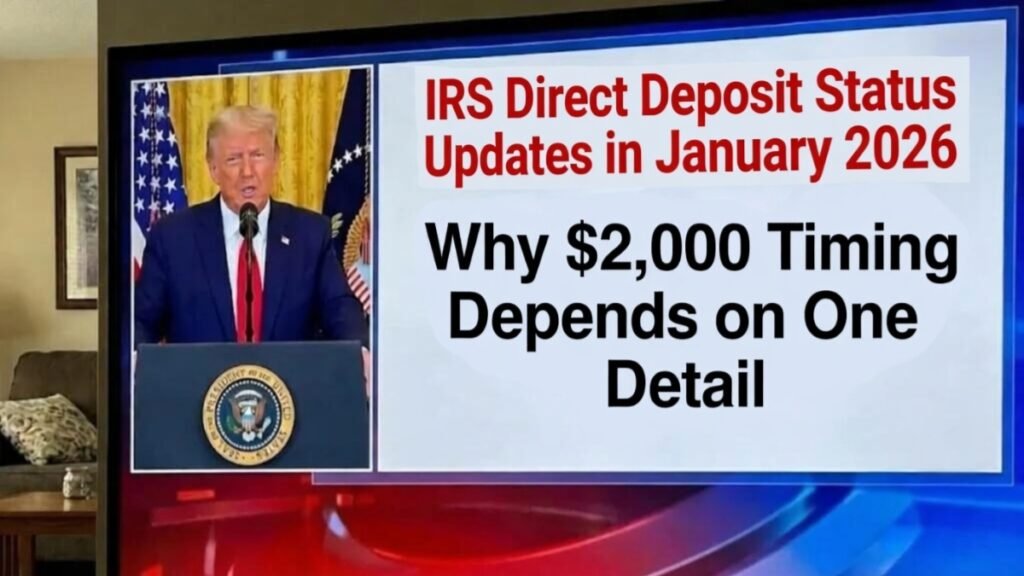
IRS Direct Deposit Updates January 2026 : January is a tense month for many taxpayers. Refund season hasn’t fully settled, W-2 forms are still rolling in, and yet bank apps are checked multiple times a day. Some filers see a direct deposit appear quickly, while others expecting a similar $2,000 refund are left staring at unchanged IRS status messages. This uneven timing often sparks confusion and concern.
As January 2026 unfolds, the IRS has begun processing millions of early tax returns. There is no universal refund release date, even when refund amounts look identical. In reality, one small but critical detail usually determines whether your direct deposit moves fast or gets delayed. Understanding that detail can ease anxiety and help set realistic expectations.
Why IRS Refund Timing Feels So Uneven in January
Early Season Processing Is Complex

January refunds rarely follow a simple schedule. The IRS uses a mix of automated systems and manual reviews, especially early in the filing season. At the same time, the agency is managing system updates, fraud-prevention adjustments, and incomplete employer data.
This creates different processing paths for similar returns. One filer clears automated checks instantly, while another return pauses briefly for verification. To taxpayers, it feels random. To the IRS, it’s standard early-season risk control.
The One Detail That Often Controls Refund Speed
Identity and Bank Verification
The single most common factor affecting January refund timing is whether the IRS can instantly verify both identity and bank details. When your name, Social Security number, prior-year data, and direct deposit information all align perfectly, refunds tend to move faster.

When something doesn’t match exactly, such as a recent bank change, name update, or filing pattern that differs from past years, the system may temporarily hold the refund. This does not mean denial or rejection. It simply means additional confirmation is required before releasing funds, especially for refunds around $2,000, which often fall within fraud-monitoring thresholds.
Why a $2,000 Refund Can Take Longer
Common Amount, Extra Safeguards
A $2,000 refund is very common, but common does not mean automatic. Early in the season, fraud filters are especially active. Legitimate taxpayers can be flagged simply because their return looks slightly different than previous years.
Small IRS adjustments can also slow things down. Minor recalculations to credits, withholding amounts, or dependent information may change the refund by only a few dollars, but they can still delay release. From the outside, it looks like nothing is happening. Internally, the return is just moving through an additional review step.
IRS Status Tools and Why They Cause Confusion
Updates Are Not Real-Time

Many taxpayers rely on IRS tracking tools, but these systems update in batches, not instantly. Refund progress can occur without visible changes for several days. This gap often leads to unnecessary worry.
Banks also add to the confusion. Some banks display pending deposits as soon as the IRS sends payment instructions. Others wait until funds fully clear. This difference explains why some people receive deposits before seeing any IRS status update.
Who Is Most Likely to See January Delays
Common Situations That Trigger Holds
Certain taxpayers are more likely to experience timing gaps in January, even when their returns are accurate.
These include:
- Early filers claiming refundable credits like EITC or Child Tax Credit
- Taxpayers who changed banks or moved recently
- Filers with new dependents or recent marital status changes
- First-time filers or those with limited filing history
These situations signal the system to slow down slightly for confirmation, not because of errors, but because of caution.
January 2026 Refund Timing at a Glance
| Processing Factor | Likely Impact on Refund Timing |
|---|---|
| Perfect identity and bank match | Faster direct deposit |
| Recent bank or name change | Possible short delay |
| Refundable tax credits | Additional verification time |
| Minor IRS adjustments | Slower release |
| Duplicate or re-filed return | Longer delays |
This table highlights why two similar refunds can follow very different timelines.
Expert Insight: Why Waiting Is Often Better Than Re-Filing
Tax professionals consistently warn against re-filing returns out of frustration. Duplicate submissions often create more delays and confusion rather than speeding things up.
Most January delays are verification holds, not audits or disputes. The system is simply ensuring the refund goes to the correct person and account. In many cases, no action is required from the taxpayer at all.
How January 2026 Compares to Previous Years
Compared to pandemic-era filing seasons, January 2026 is more stable. IRS staffing has improved, and major backlogs have been reduced. However, fraud-prevention systems are now more advanced, meaning early checks are more thorough.
The trade-off is intentional. Some refunds move quickly, while others take longer but are processed more securely. As February approaches, timelines typically become smoother and more predictable.
What to Expect in the Coming Weeks
By early February, refund processing usually accelerates. IRS status updates become more frequent, and banks handle deposits more consistently. Most January delays resolve automatically without taxpayer involvement.
If you are expecting around $2,000, remember that timing differences almost always relate to verification, not eligibility. The refund is rarely lost. It is simply waiting for final confirmation.
FAQs About IRS Direct Deposits in January 2026
Why did someone else get their refund before me?
Their return likely cleared verification faster or their bank showed pending funds early.
Does a delayed refund mean I’m being audited?
No. Most January delays are routine verification checks.
Should I re-file if my status hasn’t changed?
No. Re-filing usually causes longer delays.
Do banks affect refund timing?
Yes. Some banks post deposits faster than others.
Will my $2,000 refund still arrive?
In most cases, yes. Delays are usually temporary.
Final Thoughts
IRS direct deposit timing in January 2026 may feel unpredictable, but it is rarely personal or problematic. One small detail, clean identity and bank verification, often determines whether a refund moves quickly or pauses briefly. Patience, accuracy, and avoiding duplicate filings are the best strategies during early tax season.
If your refund hasn’t arrived yet, the most likely explanation is a routine check, not a missing payment. Staying informed and calm can make January refund season far less stressful.